
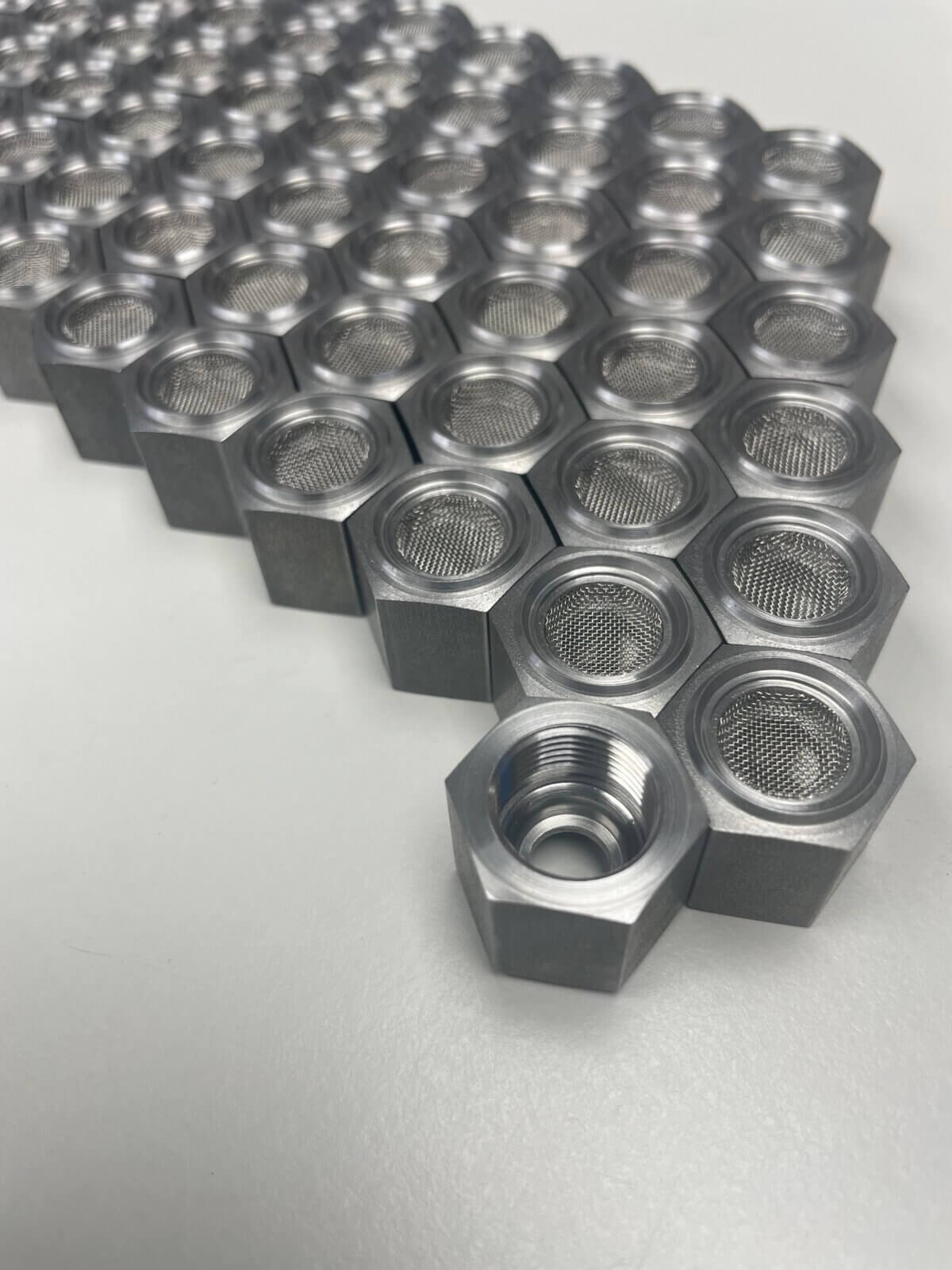
The demand for components that are identical, reliable and meet exacting specifications has never been greater. This is the driving force behind modern manufacturing: the need for precision production. More than a single process, it is a all-encompassing methodology that combines specialized machinery, controlled processes and careful measurement to achieve consistency in part creation. For industries where a fraction of a millimeter or a gram of weight makes a definitive difference, this approach is foundational to success.
The Building Blocks of Modern Precision Production
True precision production is built on interconnected systems and principles that move beyond basic machining. It is defined by several of these core characteristics.
- Exact Dimensional Output: The main goal is to produce parts that match design specifications without deviation. This involves maintaining strict control over every physical dimension.
- Consistency: A single perfect part is an achievement. Producing thousands of identical perfect parts is the objective of precision production. Repeatability is a key measure of a system’s capability.
- Controlled Processes: Every variable in the production environment – from tooling temperature and machine calibration to material properties – is monitored and managed to eliminate sources of variation.
- Verifiable Measurement: Sophisticated metrology equipment, such as coordinate measuring machines (CMMs), is used not just for final inspection but as an integral part of the production feedback loop to confirm tolerances are held.
How Precision Production Transforms Key Industries
The application of this methodology is revolutionizing sectors that depend on absolute component reliability.
- Hydraulics and Fluid Power: In hydraulic systems, component precision directly translates to operational efficiency and safety. Spools, valves, pistons and pump housings must be manufactured to exacting tolerances to maintain fluid pressure and prevent internal leakage. Even a minor deviation in a valve bore or a piston fit can result in power loss, system overheating or complete component failure. Precision production methods make it possible that these important parts achieve the necessary surface finishes and dimensional accuracy to handle high-pressure environments reliably over extended duty cycles.
- Industrial Components: Beyond fluid power, the broader industrial sector relies on precision production for a wide range of applications. This includes components for heavy machinery, material handling equipment and power transmission systems. Gears, bearings, shafts and fittings must be produced with consistency to withstand continuous operation and heavy loads. The repeatability of precision manufacturing ensures that replacement parts function correctly and that assemblies perform as designed, reducing downtime and extending equipment life.
- Automotive and Transportation: The shift toward electrification, efficiency and autonomous systems requires a new tier of component quality. Precision production enables the creation of complex powertrain elements, sensor housings and fuel system parts that contribute to vehicle longevity, reduced emissions and improved safety systems.
Meeting the Demand with Technical Capability and Partnership
As industries push for increasingly tighter specifications, manufacturers must respond with both technical solutions and a collaborative mindset. At Topcraft Precision, meeting this demand is central to our work.
Our approach integrates high-volume machining systems with a focus on predictable outcomes. We employ equipment such as CNC lathes, Swiss-type lathes and vertical machining centers. This technical foundation is augmented by automated systems for material handling and process monitoring, which support steady output and reduce the potential for human error during extended production cycles.
We understand that delivering components is only part of the equation. Our role is to function as an extension of our clients’ operations. We work directly with OEMs and Tier 1 suppliers to focus on clear communication and a shared goal. Delivering parts that integrate smoothly into their assemblies. This collaborative method helps prevent issues that can disrupt production lines, protecting our partners from costly delays and preserving their brand integrity. As noted in a testimonial from our website, this “creative thinking and problem prevention approach” is a differentiator in every project.
The trajectory of manufacturing is clear. The expectation for component quality, consistency and exactitude will continue to intensify. Precision production is the methodology that makes this possible because it turns digital designs into physical realities that power innovation across the global economy. It represents a technical capability and a necessary partnership for those who seek to build the next generation of products.