Think about the last part you ran that didn’t meet spec. Was it a dimension out of tolerance, a finish that wasn’t right or chatter marks you couldn’t eliminate? Before you blame the toolpath or the spindle, there’s an important question to ask. Was the part held correctly?
The Silent Foundation of Every Operation
At Topcraft Precision, we’ve learned one truth over and over. The most detailed program and the finest tool are only as good as the grip on the part. Workholding is at the center of every machining operation. It’s the first and most important step in making a good part. When workholding is solid, everything that follows becomes more predictable, more repeatable and more successful. Get it wrong, and you’re fighting a battle you can’t win, no matter how good your machine is.
The Two Non-Negotiable Jobs of Workholding
So, what makes workholding so vital? It comes down to two main jobs: stability and repeatability.
Stability means the part cannot move, vibrate or deflect under the forces of cutting. A milling cutter pushing into aluminum or steel generates significant pressure. If the part can shift even a few thousandths of an inch, you get inconsistent cuts, poor surface finish and accelerated tool wear. Worse, it can be a safety issue. The right fixture, vise or chuck opposes these forces directly, creating a solid connection between the part and the machine table. This lets the tool do its job cleanly, transferring the machine’s power into the cut, not into shaking the workpiece loose.
Repeatability means that part number one and part number one hundred are held in exactly the same position and orientation. If you’re locating off a set of pins in a fixture, those pins must place each blank identically. A vise must close to the same torque and on the same datum surfaces every time. Your program’s coordinates are meaningless without this repeatable grip. You’ll see dimensional drift, misaligned features and scrapped parts. This turns what would have been a profitable job into a frustrating adjustment exercise.
A Look at the Common Workholding Tools
Fixtures
Fixtures are the purpose-built solution for complex or high-volume parts. A well-built fixture mimics the part’s final geometry and provides multiple points of contact and clamping, often on surfaces that won’t be machined. It locates the part definitively to eliminate any guesswork. The design of a fixture considers chip flow, tool access and loading speed. A great fixture feels like the part was made for it.
Vises
Vises are the workhorses of the shop. But not all vises are equal. A quality machinist vise provides consistent clamping force and minimal jaw lift. This means the part is pulled down flat, not just squeezed from the sides. Using soft jaws machined for a specific part shape turns a standard vise into a repeatable workholding system. The trick is machining the jaws in the vise on the machine to guarantee perfect alignment.
Chucks
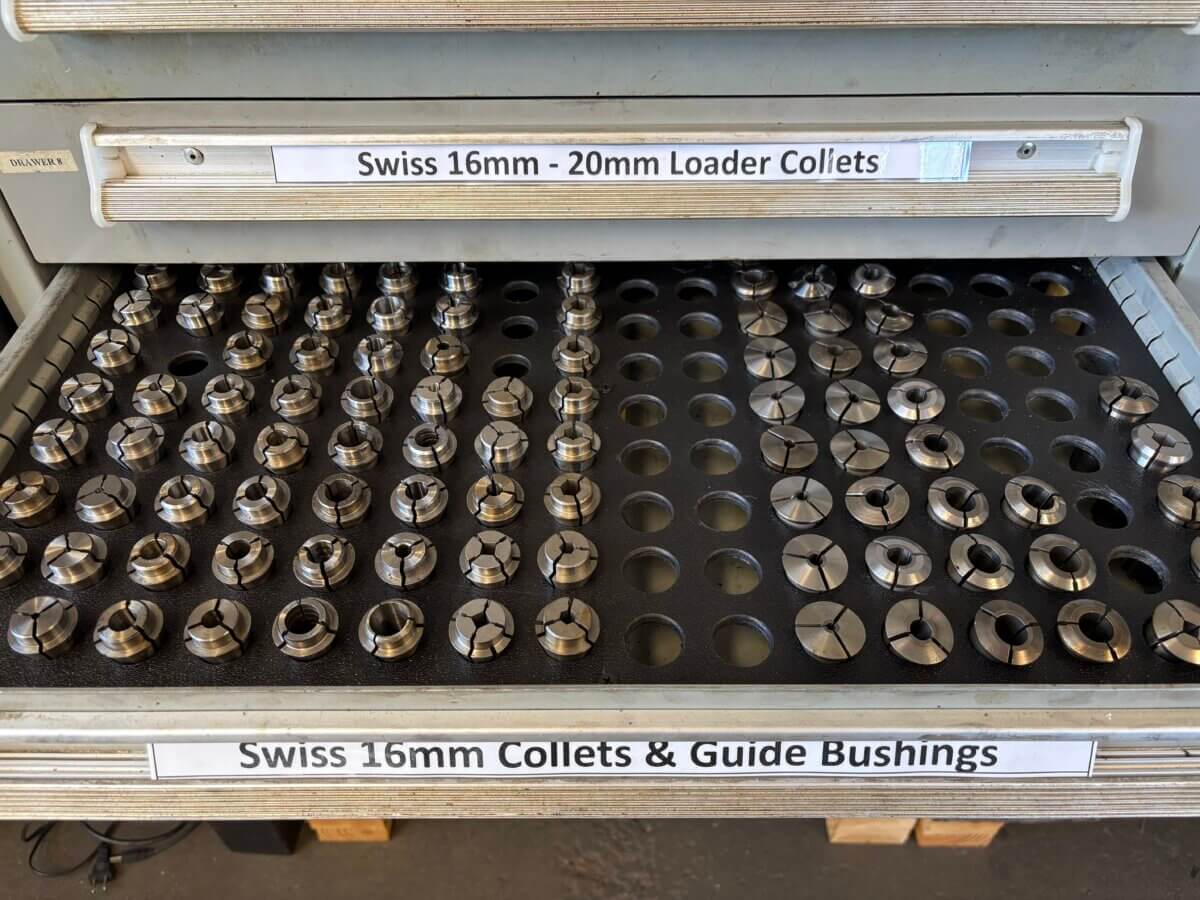
Chucks – common on lathes and sometimes used on mills – supply concentric gripping force. The accuracy of the chuck’s mechanism directly translates to the runout of your part. A chuck that doesn’t center the stock perfectly will create walls of varying thickness for turning operations. Using collet chucks or machining soft jaws in a three-jaw chuck are methods to improve grip accuracy and reduce distortion on finished diameters.
How Topcraft Treats Workholding as Step One
At Topcraft Precision, we treat workholding as the first step in process design. Not the last. For every job, we ask, “What is the most straightforward, most rigid way to hold this?” We often machine custom soft jaws or build modular fixtures that give us that perfect blend of solid grip and quick changeover. Our goal is to have a setup where, once the part is loaded, we never have to doubt its position. We check it once, then run the job with total confidence. This focus on the foundation lets us push feeds and speeds for better cycle times, achieve tighter tolerances and deliver surface finishes that meet the print without handwork.
Where to Direct Your Focus on the Next Job
The next time you program a job, spend extra time thinking about the hold. Sketch the clamping points. Consider the cutting forces and how they will push against the clamps. A little extra planning here makes everything that follows smoother, faster and more accurate. Your tools will last longer, your machine will run happier and your parts will be right the first time. That’s the real power of workholding.